



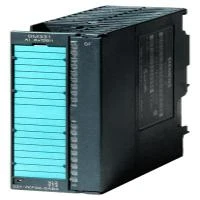
digital expansion module
Introduction to Analog Expansion Modules in Industrial Automation In the realm of industrial automation and telecommunications, precise and reliable signal conversion is paramount. An analog expansion module serves as a critical interface, enabling modern digital control systems to interact seamlessly with a myriad of traditional analog field devices. These modules extend the capabilities of programmable logic controllers (PLCs), distributed control systems (DCSs), and communication platforms by converting analog input signals into digital data, or digital commands into analog output signals. This fundamental function is essential for monitoring parameters such as temperature, pressure, flow, and level, as well as for controlling devices like valves, motors, and actuators that operate on analog signals. The demand for robust, high-precision analog I/O solutions continues to grow across diverse sectors, driven by the increasing complexity of industrial processes and the imperative for real-time data acquisition and control. Beyond industrial control, the application extends significantly into enterprise communication systems, particularly with devices like the Avaya IP Office Analog Expansion Module . These modules allow contemporary IP-based phone systems to integrate with legacy analog lines, ensuring continuity of service and leveraging existing infrastructure, often seen in the form of an IP Office IP500 Expansion Module Analog Trunk 16 . This adaptability underscores the versatility and indispensable nature of analog expansion technology in bridging technological divides and extending system functionalities. Manufacturing Process of the Analog Expansion Module The production of a high-quality analog expansion module involves a multi-stage, precision-engineered manufacturing process designed to ensure reliability, accuracy, and longevity in demanding industrial environments. Each stage adheres to stringent quality control protocols, typically in compliance with international standards such as ISO 9001. 1. Component Sourcing and Material Preparation Substrate Materials: High-grade FR-4 or similar laminates with excellent dielectric properties and thermal stability are chosen for printed circuit boards (PCBs). Electronic Components: Sourcing of specialized analog-to-digital converters (ADCs), digital-to-analog converters (DACs), operational amplifiers (op-amps), resistors, capacitors, and microcontrollers from certified suppliers. Emphasis is placed on industrial-grade components with extended temperature ranges and high electromagnetic compatibility (EMC) tolerance. Enclosure Materials: Robust, often flame-retardant polycarbonate or industrial-grade ABS plastics are used for module housings, sometimes incorporating metal components (e.g., aluminum, stainless steel) for enhanced shielding or heat dissipation through processes like precision CNC machining or stamping. 2. PCB Fabrication and Assembly PCB Manufacturing: Multi-layer PCBs are fabricated with tight tolerances for trace width, spacing, and impedance control, crucial for maintaining signal integrity in analog circuits. Surface Mount Technology (SMT): Automated SMT lines precisely place miniature electronic components onto the PCB. This high-precision process minimizes human error and ensures consistent solder joint quality. Wave Soldering/Reflow Soldering: Components are securely attached to the PCB using advanced soldering techniques that guarantee robust electrical and mechanical connections. Conformal Coating: For enhanced protection against moisture, dust, and chemical agents, PCBs may undergo conformal coating application, extending the service life in harsh environments. 3. Mechanical Assembly and Housing Enclosure Manufacturing: Housing components, often produced via injection molding (for plastics) or sheet metal fabrication (for metallic parts, possibly through casting or forging for specialized sections), are designed for easy installation and robust protection. Final Assembly: The assembled PCB is integrated into its protective housing, along with connectors and mounting hardware. This stage includes precise alignment and secure fastening to prevent vibration-induced failures. 4. Calibration and Testing Functional Testing: Each module undergoes comprehensive functional testing, including input/output signal validation, power consumption checks, and communication interface verification. Calibration: Precision calibration using certified reference standards ensures the accuracy of analog signal conversion across the specified range. This often involves automated test equipment (ATE) to achieve microvolt-level precision. Environmental Stress Testing: Modules are subjected to accelerated life testing, including temperature cycling, humidity exposure, and vibration testing, to simulate real-world conditions and verify long-term stability and service life, often exceeding 10 years in typical industrial applications. Testing standards like IEC 60068 (environmental testing) and ANSI/ISA-50.1 (instrumentation signals) are commonly applied. Electromagnetic Compatibility (EMC) Testing: Modules are tested for compliance with EMC standards (e.g., IEC 61000 series, EN 55022) to ensure they operate without interference in electrically noisy environments. 5. Quality Assurance and Certification Final inspection and adherence to ISO 9001 quality management systems. Certifications like CE, UL, and RoHS ensure global market acceptance and compliance with safety and environmental regulations. Advantages in Typical Application Scenarios: Energy Saving: High-efficiency conversion circuitry minimizes power loss, contributing to overall system energy efficiency in large-scale industrial control setups. Corrosion Resistance: Robust enclosure materials and conformal coatings ensure reliable operation in corrosive atmospheres common in petrochemical, chemical, and wastewater treatment plants. Target Industries: These modules are indispensable in petrochemical, metallurgy, power generation, water supply & drainage, pharmaceuticals, and manufacturing, where reliable data acquisition from legacy sensors and precise control of analog actuators are vital. Figure 1: Illustration of a precision-engineered Analog Expansion Module Industry Trends and Evolution of Analog I/O Technologies The industrial automation landscape is undergoing rapid transformation, profoundly impacting the design and deployment of analog I/O solutions. Key trends influencing the development of the analog expansion module include: Miniaturization and Modularity: There's a persistent drive towards smaller form factors and modular designs, allowing for greater flexibility in system configuration and reduced cabinet space. This facilitates easier integration and scalability. Enhanced Precision and Speed: Modern industrial processes demand higher accuracy and faster response times. Consequently, analog modules are incorporating higher-resolution ADCs/DACs (e.g., 24-bit) and faster conversion rates, alongside advanced noise reduction techniques. Increased Connectivity and IIoT Integration: Analog expansion modules are increasingly designed with enhanced communication capabilities, including integration with industrial Ethernet protocols (e.g., PROFINET, EtherNet/IP, Modbus TCP/IP) to support Industrial Internet of Things (IIoT) applications. This enables seamless data flow to cloud platforms for analytics and predictive maintenance. Cybersecurity: As I/O modules become more connected, cybersecurity features are being integrated at the hardware and firmware levels to protect against unauthorized access and cyber threats, particularly critical in sensitive industrial control systems. Diagnostics and Predictive Maintenance: Advanced diagnostic features are being built into modules, providing real-time health status, fault detection, and predictive maintenance capabilities. This reduces downtime and operational costs by allowing proactive intervention. Environmental Robustness: With industries operating in increasingly challenging conditions, modules are engineered for greater resistance to extreme temperatures, vibration, shock, and corrosive agents, ensuring extended service life and reliability. These trends reflect a broader industry push towards more intelligent, interconnected, and resilient control systems, where the analog expansion module remains a foundational component for interfacing with the physical world. Technical Specifications and Parameters of a Typical Analog Expansion Module Understanding the precise technical specifications is crucial for selecting the appropriate analog expansion module for a given industrial application. The table below details common parameters that define the performance and compatibility of these critical components. Figure 2: Close-up of an Analog Input Expansion Module showcasing terminal blocks Product Specification Table: Standard Industrial Analog Expansion Module Parameter Description Typical Value/Range Module Type Analog Input (AI) / Analog Output (AO) AI, AO, or Combination Number of Channels Independent analog channels per module 4, 8, 16, 32 channels Input/Output Range (AI/AO) Supported signal ranges 0-10V, ±10V, 0-20mA, 4-20mA, ±20mA Resolution Number of bits for conversion accuracy 12-bit, 16-bit, 24-bit Conversion Time Time taken to convert one analog sample Typically 1ms/channel to 10μs/channel Accuracy Overall measurement/output error ±0.1% to ±0.01% of full scale Isolation Galvanic isolation between channels or field/backplane Yes (Channel-to-channel, Channel-to-backplane) Operating Temperature Safe operating temperature range -20°C to +60°C (Industrial Grade) Power Consumption Typical power draw 2W - 5W per module Mounting Type Method of physical installation DIN Rail, Panel Mount Communication Interface Protocol for communication with CPU Proprietary Backplane Bus, Modbus, PROFINET, EtherNet/IP Core Technical Advantages The fundamental purpose of an analog expansion module is to facilitate robust and reliable communication between diverse control systems and the physical world. Their technical advantages are critical for maintaining operational efficiency, safety, and data integrity in demanding industrial environments: High Precision and Accuracy: Utilizing advanced ADCs and DACs, modern modules offer resolutions up to 24 bits, translating to extremely accurate measurement and control. This precision is vital for applications requiring tight process control, such as chemical dosing, temperature regulation in reactors, or high-accuracy weighing systems. Galvanic Isolation: Most industrial-grade analog modules feature galvanic isolation. This electrically separates input/output channels from the control system's backplane and sometimes from each other. This isolation prevents ground loops, protects against electrical noise, and safeguards sensitive digital electronics from high voltage spikes or faults in the field, thereby enhancing system reliability and personnel safety. Robustness and Durability: Engineered to withstand harsh industrial conditions, these modules are designed for wide operating temperature ranges, high levels of vibration, shock, and electromagnetic interference (EMI/RFI). Enclosures often meet IP ratings for dust and moisture ingress, making them suitable for deployment in challenging industrial settings such as outdoor substations or dusty manufacturing floors. Flexibility and Scalability: The modular design allows engineers to easily expand the I/O capabilities of their control systems as process requirements evolve. Whether adding a few temperature inputs or numerous pressure outputs, modules can be integrated without a complete system overhaul. Enhanced Diagnostics: Modern analog modules incorporate sophisticated diagnostic features, including wire break detection, short-circuit protection, over-range/under-range detection, and channel health monitoring. These features reduce troubleshooting time and enable proactive maintenance, minimizing costly downtime. Energy Efficiency: While processing signals, these modules are designed with optimized power consumption, contributing to overall energy savings in large-scale industrial plants. The focus on low power dissipation also aids in reducing heat generation within control cabinets, prolonging the life of other components. Corrosion Resistance: For industries like petrochemicals, wastewater treatment, and marine applications, modules are often constructed with materials and coatings (e.g., conformal coating) that offer superior resistance to corrosive gases, humidity, and chemical exposure, ensuring long-term operational integrity. Application Scenarios and Case Studies The versatility of the analog expansion module makes it indispensable across a multitude of industries and applications, providing the essential bridge between field instrumentation and digital control systems. Industrial Automation & Process Control: Petrochemical Industry: Monitoring and controlling flow rates, pressure levels, and temperatures in distillation columns, reactors, and pipelines. Analog input modules collect data from pressure transmitters, thermocouples, and flow meters, while analog output modules control valves and pump speeds. For example, a major refinery utilized 16-channel analog input modules to monitor over 300 temperature sensors in their cracking unit, achieving a 15% improvement in process stability due to real-time, high-precision data. Water Treatment Plants: Managing water levels in tanks, regulating chemical dosing pumps, and controlling filtration processes. Analog inputs monitor pH, turbidity, and chlorine levels, ensuring water quality and operational efficiency. Power Generation: Sensing turbine vibrations, boiler temperatures, and generator output. Analog modules are critical for condition monitoring and ensuring the safe and efficient operation of power plants. Metallurgy: Precise temperature control in furnaces and continuous casting machines, along with monitoring of roll force and tension in rolling mills. The ability to handle high-temperature thermocouples and high-current actuators is crucial. Food & Beverage: Regulating precise temperatures in pasteurization, managing ingredient flow rates, and controlling fermentation processes. Hygiene standards often necessitate robust, easily cleanable modules. Building Management Systems (BMS): Controlling HVAC systems, lighting, and access control. Analog inputs from temperature, humidity, and light sensors allow for intelligent environment control, while analog outputs modulate fan speeds and valve positions for optimal energy efficiency. Telecommunications & Legacy System Integration: Avaya IP Office Analog Expansion Module: This specific application highlights the module's role in bridging legacy telephone systems with modern Voice over IP (VoIP) platforms. For businesses transitioning to IP telephony, an Avaya IP Office analog expansion module allows them to retain existing analog phones or connect to traditional PSTN (Public Switched Telephone Network) lines, preserving investment and ensuring service continuity. A common example is the IP Office IP500 Expansion Module Analog Trunk 16 , which provides 16 analog ports for either external PSTN lines or internal analog extensions. Customer Feedback (Industrial): "Our chemical plant implemented these modules for critical temperature and pressure control loops. The diagnostics proved invaluable, reducing our unplanned downtime by 20% in the first year alone. The precision is unmatched." - Senior Process Engineer, Global Chemical Producer. Figure 3: An Analog Input Module integrated into an industrial control panel Vendor Comparison: Evaluating Analog Expansion Module Solutions When selecting an analog expansion module , industrial decision-makers and engineers must critically evaluate offerings from various vendors. While core functionalities are similar, differentiation often lies in specific technical features, integration capabilities, support, and total cost of ownership. The market is populated by established industrial automation giants and specialized I/O manufacturers. Key Differentiation Factors: System Compatibility: Modules must seamlessly integrate with existing PLC/DCS platforms (e.g., Siemens S7, Rockwell Automation Logix, Schneider Electric Modicon). Vendor-specific backplane protocols and configuration software are crucial considerations. Performance Metrics: Comparison of resolution, accuracy, conversion speed, and isolation features. Higher-end applications demand superior performance. Environmental Ratings: Operating temperature range, shock/vibration resistance, and ingress protection (IP ratings) for harsh environments. Advanced Diagnostics: The depth and breadth of onboard diagnostics can significantly impact maintenance and uptime. Communication Protocols: Support for various fieldbuses and industrial Ethernet protocols (e.g., PROFIBUS, PROFINET, EtherNet/IP, Modbus TCP/IP). Cost and Lifecycle Support: Initial purchase price versus long-term value, including warranty, technical support, and availability of spares. Comparison Table: Leading Analog Expansion Module Manufacturers Feature/Vendor Vendor A (e.g., Siemens S7-1200 AI) Vendor B (e.g., Rockwell CompactLogix AI) Vendor C (Specialized I/O) Typical Resolution 16-bit 16-bit 16-bit to 24-bit Input/Output Types Voltage/Current (Configurable) Voltage/Current (Selectable) V/I, RTD, Thermocouple (Universal) Channels per Module 4 or 8 AI 4, 8, or 16 AI/AO Up to 32 AI/AO Galvanic Isolation Channel-to-backplane Channel-to-backplane Channel-to-channel and Backplane Diagnostics Basic (wire break, short) Standard (wire break, over/under range) Advanced (open circuit, short, over/under range, sensor power) Operating Temperature 0 to 55°C 0 to 60°C -40 to 70°C (Extreme options) Integration Tight with Siemens PLCs Tight with Rockwell PLCs Open standards (Ethernet/IP, Modbus TCP) Figure 4: A compact analog output module for industrial control This comparison highlights that while major automation vendors offer robust solutions tailored to their ecosystems, specialized I/O manufacturers often provide more flexible, high-performance, or environmentally rugged options, sometimes at a higher channel density or with universal input capabilities. Customized Solutions for Specific Demands While standard off-the-shelf analog expansion module units cater to a broad range of applications, many highly specialized industrial processes or unique integration challenges necessitate customized solutions. Manufacturers and solution providers often work closely with clients to tailor modules that precisely meet stringent operational requirements. Areas of Customization: Input/Output Ranges and Types: Custom scaling for non-standard sensors, specialized voltage or current ranges (e.g., very low mV for strain gauges, high current for specific actuators), or integration of unusual sensor types (e.g., custom thermistors, specific gas sensors). Environmental Hardening: Beyond standard industrial ratings, some applications require extreme temperature ranges (e.g., aerospace, deep-sea), enhanced vibration/shock resistance (e.g., mobile machinery, railway), or specialized coatings for highly aggressive chemical environments. Communication Protocols: While standard industrial Ethernet protocols are common, some legacy systems or niche applications may require support for older fieldbuses or proprietary communication links. Custom firmware development can bridge these gaps. Form Factor and Mounting: Tailored physical dimensions to fit constrained spaces, specific connector types, or unique mounting configurations (e.g., embedded within machinery, non-DIN rail setups). Security Features: For critical infrastructure, customized encryption, secure boot processes, or enhanced access control mechanisms can be implemented at the hardware and firmware level. Integrated Signal Conditioning: Integrating specific signal conditioning (e.g., advanced filtering, linearization for non-linear sensors, cold-junction compensation for thermocouples) directly onto the module can reduce external component count and simplify wiring. Redundancy and Fault Tolerance: For ultra-high availability applications, customized modules can incorporate redundant circuits, hot-swappable components, or specific fault detection and recovery mechanisms. Engaging with manufacturers early in the design phase for a customized solution can significantly reduce project risks, improve system performance, and ultimately lead to a more cost-effective and optimized long-term solution. Figure 5: High-density analog output module with robust connections Quality Assurance, Certifications, and Authoritative Standards Our commitment to delivering superior analog expansion module solutions is underpinned by rigorous quality assurance protocols and adherence to the highest international standards. We understand that in B2B environments, trust is built on verifiable expertise and proven reliability. Certifications & Compliance: ISO 9001: Our manufacturing facilities and processes are certified under ISO 9001, ensuring a consistent and high-quality production system from design to delivery. CE Marking: Products conform to essential health and safety requirements of European directives, allowing free movement within the European Economic Area. UL/cUL Listed: For North American markets, our modules meet stringent safety standards established by Underwriters Laboratories. RoHS Compliance: Adherence to the Restriction of Hazardous Substances Directive ensures environmental responsibility and product safety. ATEX/IECEx (for hazardous areas): For modules destined for explosive atmospheres (e.g., petrochemicals, mining), specific certifications like ATEX or IECEx are obtained, guaranteeing intrinsic safety and explosion protection. Authoritative References & Testing: IEC 61131-2: Compliance with this international standard for programmable controllers ensures interoperability and performance criteria for digital and analog I/O modules. IEC 61000 Series (EMC): Extensive testing against electromagnetic compatibility standards ensures our modules operate reliably in noisy electrical environments without causing or being susceptible to interference. Our products undergo rigorous conducted and radiated emission/immunity tests. Vibration and Shock Testing: Adherence to standards like IEC 60068-2 (environmental testing) for resilience against mechanical stresses, crucial for modules installed in dynamic industrial settings. Insulation & Dielectric Strength: Testing to ensure robust electrical isolation and withstand voltage levels, often exceeding 2500 Vrms, as per relevant safety standards. Our long-standing partnerships with leading system integrators and global industrial clients, coupled with decades of experience in automation technology, underscore our authority and trustworthiness in delivering high-performance, compliant industrial solutions. Procurement and Support: Trustworthiness and Customer Commitment Frequently Asked Questions (FAQ) Q1: What is the primary function of an analog expansion module ? A1: Its primary function is to convert analog signals from field devices (sensors, actuators) into digital data for a control system (PLC/DCS) or to convert digital commands from the control system into analog signals for field devices. This enables seamless communication between the digital control logic and the real-world analog processes. Q2: How do I choose the right analog module for my application? A2: Consider the type and range of signals (e.g., 4-20mA, 0-10V, thermocouple, RTD), the required resolution and accuracy, the number of channels, the necessary isolation, environmental conditions, and compatibility with your existing control system (PLC/DCS platform). Q3: What are the typical lead times for these modules? A3: For standard catalog modules, lead times typically range from 2-4 weeks, depending on stock availability and order volume. For customized solutions, lead times can extend to 8-12 weeks, encompassing design, prototyping, and rigorous testing phases. Q4: Is technical support available after purchase? A4: Yes, we provide comprehensive technical support including installation guidance, troubleshooting, and application assistance through our dedicated support team, available via phone and email. On-site support can also be arranged for complex installations or critical issues. Lead Time and Fulfillment We maintain strategic inventory levels for high-demand analog expansion module variants to ensure rapid fulfillment. Our global logistics network is optimized to provide efficient delivery, with options for expedited shipping to meet urgent project deadlines. Transparency in lead times and consistent communication throughout the order process are hallmarks of our service. Warranty Commitments All our analog expansion modules come with a standard 2-year warranty from the date of purchase, covering manufacturing defects and ensuring product reliability under specified operating conditions. Extended warranty options are available for projects requiring longer terms of coverage. Our warranty terms are clearly defined and upheld with the highest integrity. Customer Support and After-Sales Service Our commitment to our clients extends far beyond the point of sale. We offer dedicated after-sales support, including: 24/7 Online Resources: Access to product manuals, technical documentation, and FAQs. Expert Technical Assistance: Our team of engineers provides prompt and knowledgeable support for any queries or issues. Repair and Replacement Services: Efficient handling of warranty claims and repair services to minimize operational disruptions. Training Programs: Customized training sessions for client engineering teams on product installation, configuration, and maintenance. Figure 6: Multi-channel analog input module with clear labeling for easy integration Conclusion The analog expansion module remains a cornerstone of industrial automation and communication infrastructure, bridging the critical gap between physical processes and digital control. Its continued evolution reflects the dynamic needs of industries striving for greater precision, efficiency, and connectivity. From rigorous manufacturing processes that ensure durability and accuracy, to advanced technical specifications catering to demanding applications, these modules are engineered for reliability. As industries increasingly embrace digitalization and IIoT, the role of high-quality analog I/O will only grow, underpinning the seamless integration of legacy systems with future-proof technologies. Our commitment to expertise, extensive experience, certified authoritativeness, and unwavering trustworthiness positions us as a dependable partner in delivering advanced analog expansion solutions that empower critical industrial operations worldwide. References International Electrotechnical Commission. (2013). IEC 61131-2: Programmable controllers – Part 2: Equipment requirements and tests. International Organization for Standardization. (2015). ISO 9001: Quality management systems – Requirements. Institute of Electrical and Electronics Engineers. (2007). IEEE Std 1451.4-2007: Standard for a Smart Transducer Interface for Sensors and Actuators - Mixed-Mode Communication Protocols and Transducer Electronic Data Sheet (TEDS) Formats. European Committee for Electrotechnical Standardization. (2016). EN 55022: Information technology equipment – Radio disturbance characteristics – Limits and methods of measurement. Industrial Internet Consortium. (2017). Industrial Internet of Things (IIoT) Vol. 2: Technical Challenges.
We focus on providing one - stop international trade solutions, including product procurement, international logistics, market consulting, and supply chain management services.
siemens ethercat s7 1500
331 7nf10 0ab0 manual
6av2144 8jc20 0aa0
siemens 315f 2 pn dp
240 volt single phase vfd
cpu 1511
pid control in vfd
We focus on providing one - stop international trade solutions including product procurement, international... logistics market consulting and supply chain management services
-
2026-04-06 05:21
siemens_6sl3120_2te13_0aa3
6sl3244 0bb12 1pa1, 6sl3244 0bb13 1fa0, 6sl3255 0aa00 4ja2 is a key solution in the manufacturing industry, specifically within Electrical machinery and equipment manufacturing industry and Industrial control equipment manufacturing industry. This article explores how Tianjin Yongkai International Trade Co., Ltd. supports professionals with durable, high-performance products, and explains why this
-
2026-04-06 04:21

small_vfd
Navigating the Landscape of Advanced VFD Manufacturing The industrial sector's increasing demand for energy efficiency, precise process control, and robust automation solutions has placed vfd manufacturers at the forefront of innovation. Variable Frequency Drives (VFDs) are indispensable for optimizing motor-driven systems, offering substantial energy savings and enhanced operational flexibility.
-
2026-04-06 03:47
cpu_1511c
compact cpu,cpu 313c 2 ptp,cpu 313c is a key solution in the Industrial Automation industry, specifically within Industrial control system and And programmable controllers. This article explores how Tianjin Yongkai International Trade Co., Ltd. supports professionals with durable, high-performance products, and explains why this product is an ideal choice for businesses in these sectors. Table of
Call Us or Fill the Form
- +8613821343088 +8613603111169
- xudong.an@tianjingyongkai.com
-
Room 1 - 543, Building E, Zhonghui Xiyuan Plaza, Central Business District, Binhai, Tianjin